
Our Hero, Balthazar really gets what its like to be a teen, online, in 2026. Radicalization of youth and an epidemic of loneliness are amplified in the online world, where those who feel lost can build a persona from behind a camera to find a community when the real world has been nothing but hostile towards them. But how can we know who we really are if on camera it is all a performance? Constantly seeking attention that is not reciprocated in the real-world, these online “performances” for views fill the void, but can end up having dire real-world consequences. Oscar Boyson’s film explores these ideas through the lives of two vastly opposite boys, who at the root of it, may not be that different at all.
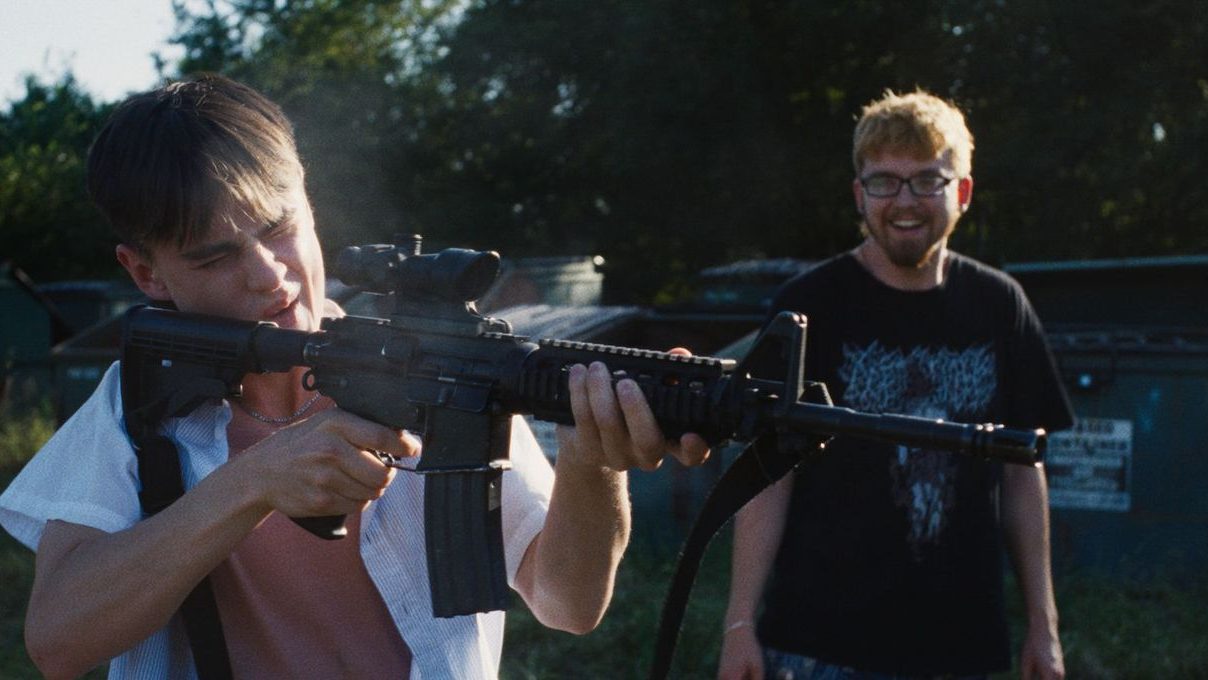
Wealthy and entitled New York City teen Balthazar, or Balthy as he prefers, has nothing to lose. Intent on impressing his classmate, after it is clear everyone else in his life has lost interest in him, he sets his mind on befriending an online presence who calls themself “deathdealer_16”, in an attempt to stop a violent act he has threatened to commit. When Balthy travels to Texas, the two meet up, where Balthy learns that deathdealer_16 is Solomon, another similarly lonely teenager. As the two form a misguided bond, Balthy ends up in over his head when he must face the real world consequences of his reckless decisions.
There is a large trend of “grief narratives” online, as described by co-writer Ricky Camilleri. This describes the outpouring of emotions online, with those often inserting themselves into someone else’s tragedy, often with the goal of getting more hits or becoming more relevant online. Where Balthy posts videos of himself crying online about tragedies and gun violence, Solomon is tough-talking, sharing violent videos from which he was absent and posting threats. Camilleri and co-writer and director Oscar Boyson wondered what would happen when one young, sensitive boy, obsessed with forming his own grief narrative meets his antithetical tough persona, but they both struggle with the same issue: loneliness.
Dealing with a theme as difficult as violence and school shooting in America, Boyson approaches the topic with a refreshing comedic eye. As serious as the topic is, the boys are still boys. Immature, inappropriate, their characters are fully realized and feel as authentic as the boys you remember from high school.
Yet as much as the boys are still treated as boys, the film never holds back from its critique on masculinity, and how toxic masculinity breeds a culture of loneliness, judgement, and gun violence in America.
Working with such a tight script is co-stars Jaeden Martell and Asa Butterfield. Martell plays the entitled rich Balthy annoyingly well, while Butterfield is unrecognizable as Solomon. He gives one of the best performances of the year, manic with rage as he searches for acceptance and love, balanced with a tender look at who he could be in scenes with his ailing grandmother.
What struck me more than anything else was how well Martell, Butterfield, and the screenplay portrayed the entitlement many young men feel today about their place in the world. They feel are entitled to friendship, partnership, care, without putting in any work to better themselves or accepting that they have space to grow. Instead, they believe that these are things they have a right too, pushing them to become radicalized online when it is not handed to them. We have created a world where the Balthys and the Solomons feel they have a right to companionship just because they are young men, pushing them to believe they also have a right to violence when things don’t go their way.
The film feels a little bit like Sean Price Williams’ The Sweet East (2023), a similarly haunting satire about the state of America today with its abundance of radical groups. Boyson’s satire here is much less surreal, but still echoes the dread we feel in modern America while still remaining surprisingly funny through the darkness of the topics.
There is a brilliant scene when the two boys first meet and Solomon is showing Balthy his collection of firearms. Along with the weapons, he shows off prominent symbols behind his violence, laying out a pride flag next to an armband with a swastika, saying he “has had a lot of phases”. In a desperate search for belonging and a community, the online world has forced Solomon into so many different personas. Much like Balthy’s crying videos showing manufactured grief about every single topic that will get him acceptance to a cause, Solomon has gone in the direction of violence as a means of acceptance to a community.
In this way, Boyson shows how we are all playing characters trying to fit in. The online world amplifies this, stretching out our audience, and leaving us unable to reconcile who we want to be online with who we really are. This can force those who lack a safe space outside of the online world into radical communities online, forcing their real-world beliefs to become blurred with the communities they witness online.
This outside real world is never forgotten by Boyson and Camilleri’s brilliant screenplay, who write an ending that forces the boys back in to the real world, to face the real-life consequences of their own entitlement and reckless behaviour.
The film also does not play it safe, which is a breath of fresh air in modern films. It really gets what its like to be part of this generation that has been raised on screens, and does not hold back in its critique and portrayals of its dangers.
With gun violence in America at an all time high and school shootings reported almost daily, it’s a difficult topic to discuss in the culture today. What director Oscar Boyson does so well is his focussed approach to the subject matter through the idea of online grief narratives and how hungry we all are for attention. The root of what makes teens so desperate for community truly is their lack of it in the real world. Searching for it online can push those who are vulnerable into manufactured personas of grieving performers and violent identities, as they are searching to find their place in the real-world.
Our Hero, Balthazar will be released in select Canadian cinemas on June 7. Image courtesy of Prodigy PR.
