
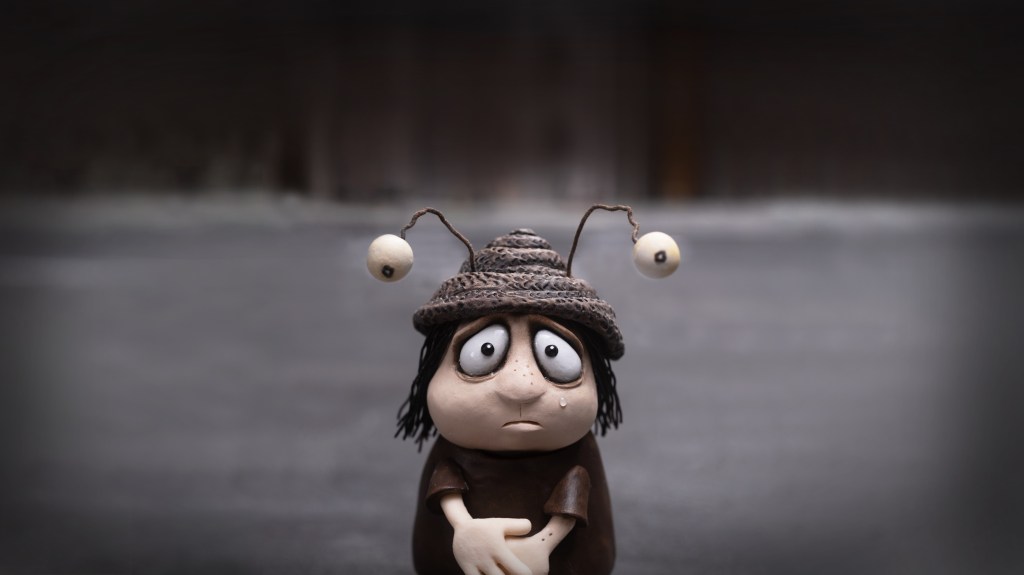
If someone had told me that one of the most devastating films to come out in 2024 would be an adult stop-motion animated film about a woman who loved snails, I would never have believed them, but yet it is true. The film is Memoir of a Snail, the latest from director Adam Elliot, and stars Succession‘s Sarah Snook in the leading voice role as Grace, a woman who has experienced a troubled life, and is obsessed with snails. We watch as Grace experiences immeasurable loss, yet must move forward, always thrust into new and difficult experiences as she grows up. Meeting new people and faced with what her life has become, Grace’s story is dark and bleak, but sheds hopeful light on the eternal question of how we continue to live when faced with a life that seems to do nothing but weigh us down.
From Grace’s passion for snails and her story that follows, we learn that snails never go back over their trails. They always move forwards, leaving trails of snail slime always behind. Like these snails, Grace’s life, too, is always moving forwards, even when she is not prepared for what is to come. From losing her mother and father, to being separated from her twin brother and moved across the continent, Grace feels like life is simply happening to her, and a life that is filled with misery. As she reflects on people she has met and past relationships, all while trying to remain in contact with her brother, she struggles to see a future where she is truly happy. Constantly weighed down by past traumas and experiences, Grace struggles to continue on in the face of the burdens of her past, when her past is also the place where she last felt truly happy.
It is difficult to talk about a film that remains this bleak through almost its entire runtime. Never shying away from truthfully representing topics of death, abuse, and mental illness, Elliot expertly uses animation to subvert expectations surrounding these serious subject matters. It is no secret that the world has a bias against animated films, often relating them to children’s media and stories. For myself, when I learned about this film, I automatically thought it would be a darker children’s film, rather than a purely adult animated film. And oh boy, was I wrong. From on screen death to swinger parties and characters with fetishes, Elliot completely broke down the barrier between what animation can portray for older viewers, subverting my expectations of this film given its medium as stop-motion.
Along with the shock of this subversion, this also helps to break down barriers audiences may have between themselves and the subject matter. Seeing a film use stop-motion animation, a craft literally involving physical objects being manipulated in small increments to appear in motion, deal with such serious topics can act as a reminder that even the most technologically straightforward form of animation requires hours upon hours of behind the scenes work to bring to life just minutes of the film. If this much work, arguably more work than directing actual people exhibit individual motion to say lines, is worth it to bring these stories of these topics to the screen, then aren’t they important enough for us to think more deeply about in our own lives? How Grace’s story of embracing her trauma to continue moving forward in her life was worth hundreds of hours to tell with clay, as a reminder that we too, the creators of this clay and these images, are also worth just as much as she is.
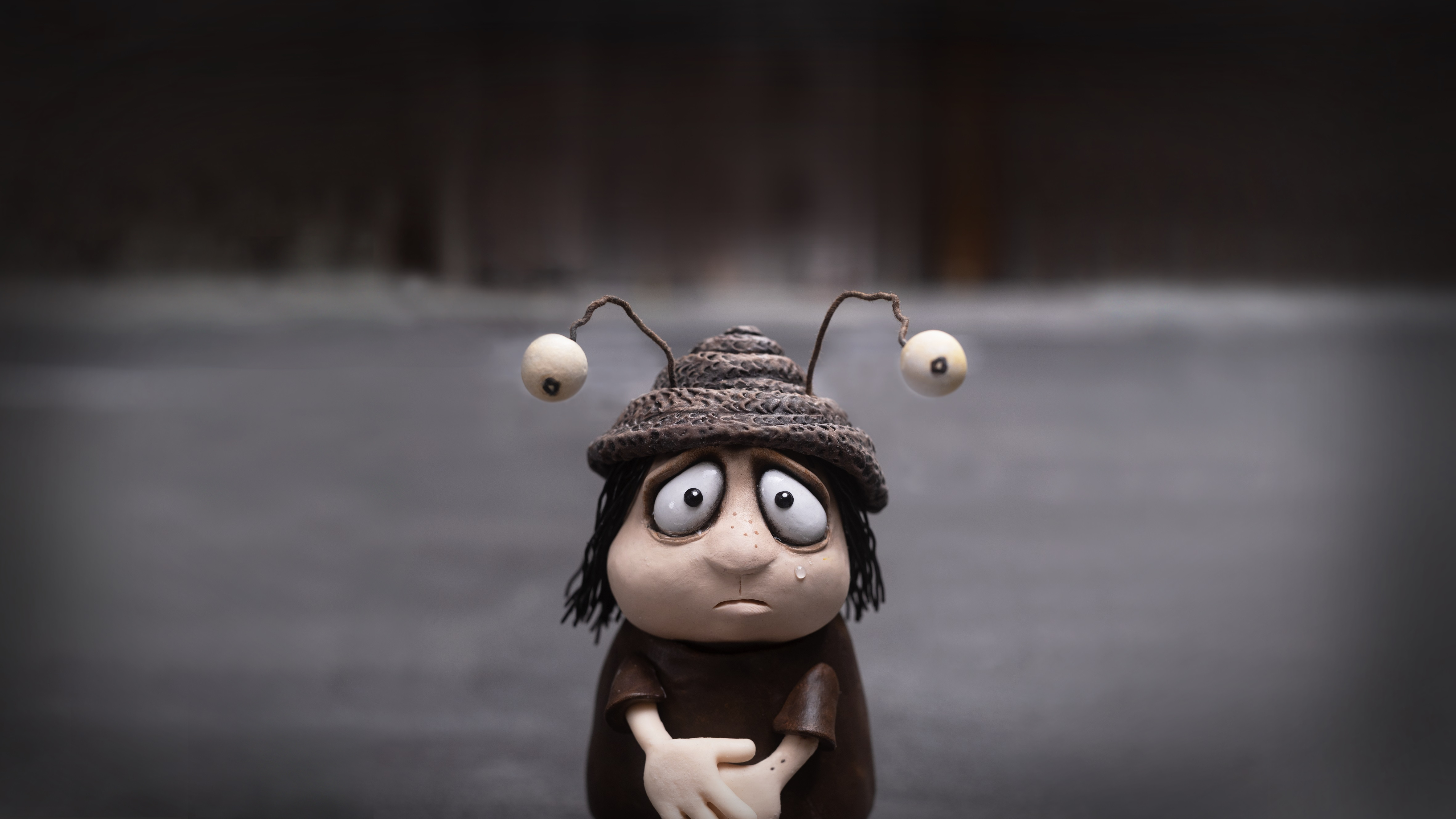
The visuals here, on top of the amazing stop-motion craft at work here, are truly stunning, fully embracing the grimey and claustrophobic feelings we have while watching Grace’s life unfold. We feel trapped with Grace, as we hope for the best but are taught to expect the worst for her, wanting to escape these feelings but unable to look away from the bleak world that surrounds Grace and her brother Gilbert, and the story of their lives.
Along with the above literal darkness of the film that works so well, the subject matter tackled in Memoir of a Snail is very dark. It fully dives into Grace and her brother Gilbert’s traumatic experiences from childhood into adulthood, never easing up on the true horrors that real people are living through each day. The film is relentless, rarely letting up on Grace’s horrific experiences, providing one punch after the next. It also is a lot weirder that I ever could have imagined, going places I truly never thought an animated film would go. But these are aspects that make the story work that much better. Pushing us, as the viewers, deeper into the hole with Grace as each aspect of her life slowly falls apart, often in quite absurd ways. We are dug deeper and deeper into the ground along with Grace, so by the time the third act arrives, we are just as grateful for its change of pace as Grace is.
As we reach Grace’s adult years, we are reminded how much our childhood experiences shape us. When trauma and loss are experienced at such a young age, how do we continue to live in a world that keeps moving forward. We continue to grow, and those around us do as well, but these experiences stay with us. Grace becomes an adult, but she is also the young girl who lost her mother, and the young girl who could not save her father, and the young girl who became an orphan and had to live life without her twin. These experiences weigh Grace, and us, down. But through her life, and her struggles and experiences, Grace is also forced to look at the question of “when is it time to let go”. To acknowledge that these things made her who she is, but to free herself from her past, and continue to move forward while leaving her trail of life behind her. A trail, like a snail’s, that will always follow her, but will never hold her back.
Grace’s friend Pinky reminds us that worst cages are the ones we create for ourselves. We are not locked in by external forces, but keep ourselves inside with the fears we hold within. It is normal to be scared, to have self-pity. But we must face these feelings and experiences head on. Life can only be understood backwards, with the context of all that came before, but we have to live it forwards. Snails never go back over their trails, and are always moving forwards. Pinky reminds Grace, and us, that it is time to leave our own snail trail all over the world, and this is not something to feel guilty about. Presented with stunning stop-motion animation that subverts expectations surrounding the use of animation on adult media, Memoir of a Snail will leave theatres full of sniffling audiences, ready to shed their snail shells and leave their trails on the world.
Memoir of a Snail will be released in select theatres in Canada on November 15, 2024. Image courtesy of Mongrel Media.
 After Screening Cinema