
How do we recognize evil around us? How do we know that what we have been taught and what we believe is not continuing this evil around us? Jonathan Glazer’s latest film, The Zone of Interest, poses these questions in its exploration of the Holocaust and World War II following the life of a Nazi family. The film follows Rudolf Höss, the commandant of Auschwitz, and his wife Hedwig, who live with their young family next to the camp. Between the film’s genius use of sound in lieu of ever visually showing the atrocities of the Holocaust on screen, as well as stunning performances and a complete use of all the space on screen, Glazer crafts a horrifying look at the Holocaust, World War II, and true evil as history knows it.
Glazer’s film, The Zone of Interest, follows the Höss family, who live in a house next to Auschwitz concentration camp. The father, Rudolf, is the commandant of Auschwitz, tasked with a leadership role over the inner-workings of the camp, while the mother Hedwig spends her days tending to the children at home and maintaining her garden. Along with their young children, Rudolf and Hedwig go about their days, always surrounded but never seeming to be bothered by the horrors of torture and murder happening within the concentration camp just steps away from their home.
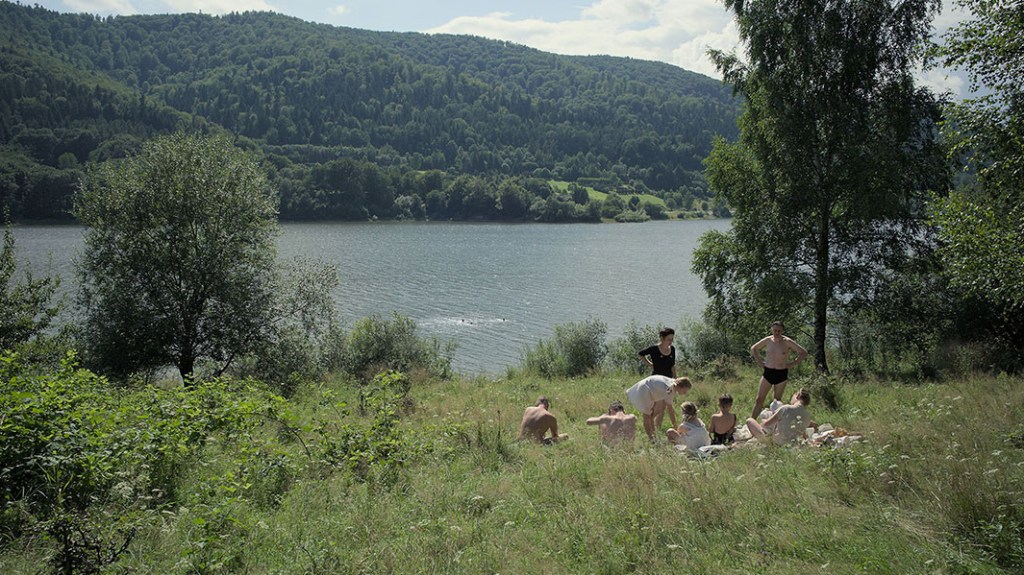
The Zone of Interest opens with a minutes-long orchestral overture playing over a black screen, where audiences are forced to sit in the dark with only the sounds of the music. Setting the tone for the film going forward, this opening also works to challenge the viewer’s expectations of the film before the first shot. When the first shot does appear, it is bright and jarring, and not one that would be expected to open up a film dealing with this horrific of subject matter. An extreme long-shot of a young family, one that we will learn is that of Rudolf and Hedwig, playing by the river on a colourful summer day, it could be a painting and exist in any number of films. But this opening shot, which follows the grueling opening overture, sets viewers up for the way that over the following 100 minutes, normalcy will be used to articulate horror. The normal family, attempting to life a normal life, right beside what we as viewers know to be one of the sites of a horrific genocide in human history.
Through the use of sound and space on the screen, there is rarely a shot or scene in the film where viewers are not reminded of the events occurring next door to the Höss family home. Countless conversations in the film are over background sounds of gunshots and screaming, while most outdoor shots include some aspect of the background showing the cement wall and barbed wire that separates the home from the camp. Using sound and the composition of every shot to depict these horrors as background to the seemingly “normal” lives of the Höss family highlights Glazer’s deliberate decision to not show these horrors explicitly on screen, instead relying on audience’s knowledge of what these sounds and visuals mean to craft a discussion on knowing evil using a perceived normalcy.
Through this deliberate not-showing, Glazer inserts viewers directly into the lives of the Höss, who live every day with these sounds and visual walls. They go about their day, making dinner, gardening, catching up with friends, all while murder and torture are happening within the camp mere steps away from them. Because of the beliefs Rudolf and thus his family holds as part of the Nazi party, they believe that what is going on in the camps is the right thing to do. They torture and murder because they believe that they have a right to do so. So while this family is content to live beside these walls, beside this camp where Jewish people are being beaten and murdered, the audience feels uncomforted, and sick at every scene including these walls and sounds, knowing for certain that what the Nazi party and the commandant Höss are doing is pure evil and wrong. Glazer trusts his audience to know what is happening behind these walls, and uses this inherent audience understanding to craft a horrifying exploration of the Nazi family living next to the camp.
The film does not completely keep viewers on the outside of the horrors committed in the Holocaust. A large part of Rudolf Höss’ job throughout the film to make the murders of the Jewish people in the camps more efficient, while Hedwig and her friends are shown picking through clothes out of a pile that were stolen from the Jewish women when they arrived at the camps. But as these horrors exist in their lives, as part of the everyday, they too are framed as normal in the terms of the film. This continued and exaggerated normalcy continues throughout the film to beg the question, do these people, Rudolf and Hedwig Höss even know that what they are doing is evil, or do they, like so many others, simply believe it is right because their party tells them it is.
The film goes in a unique direction in the third act, which will be polarizing to many viewers. This directional change is jarring, but what it says about evil, and more pointedly the audience’s own participation in recognizing, or being unable to recognize, when they are doing something truly horrible, is incisive and quite uncomfortable for all to watch.
The Zone of Interest is never sensational in presenting the Höss family. Rather, it is quite mundane, capturing the every day life of this family living next to a concentration camp in World War II Germany. In lieu of ever showing visually what is happening inside the camps, Glazer presents almost every scene in the film with some auditory or background visual reminder of the horrible circumstances within the camp, placing viewers in the normalcy of the Höss family’s lives. Using the sound brilliantly and composing each shot with this mundane in mind, cracks form in this perceived normalcy of the Höss family almost immediately from the viewer’s point-of-view, as Glazer trusts his audience to understand and know what is occurring behind the walls surrounding this family home. This forms the base of what becomes a truly terrifying look at World War II, and a question of how we know what evil truly is. What sounds do we hear, and what walls do we walk by every day of our lives that we fail to recognize as anything but normal, simply because of what we have been taught to believe and stand for?
The Zone of Interest was screened at the 2023 Toronto International Film Festival. Image courtesy of TIFF.
 After Screening Cinema