
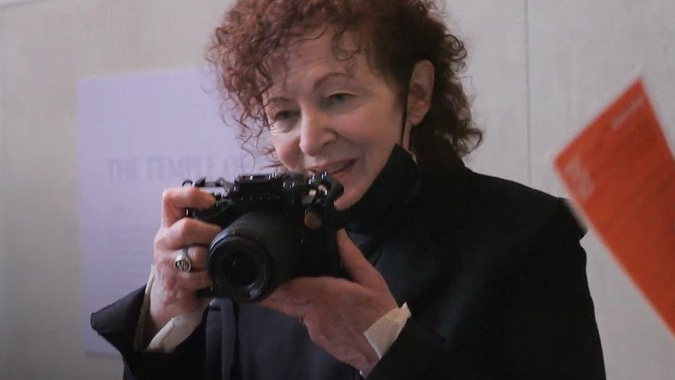
“The wrong things are kept secret in society. And that destroys people” – Nan Goldin, in All the Beauty and the Bloodshed
Artist and activist Nan Goldin shares these words and other insights near the end of the 2022 Oscar-nominated documentary feature All the Beauty and the Bloodshed, tying together a lifetime of love and loss in such an utterly devastating realization. The film, directed by Citizenfour’s Laura Poitras, tells the life and legacy of Goldin, and American photographer known for her work in making visible LGBT subcultures, the HIV/AIDS epidemic, and moments of intimacy not often shown in public art galleries. Through its unique incorporation of Goldin’s works to share her history, alongside modern documentary techniques sharing moments from her activism working to hold the Sackler family and Purdue Pharma accountable for the opioid epidemic, the film drives home this deeply personal yet universal story of Goldin’s art, activism, and how powerful these two are when put together.
The documentary tells the history of Nan Goldin, the acclaimed American photographer. Her story begins with her childhood, and the challenges her older sister faced in their home as a child. In the wake of her sister’s suicide, Goldin was sent to live with foster families, before ultimately ending up in New York City. Living as an artist amongst other artists, her community was made up of members of the queer community, with many stories shared throughout the film of friends and lovers she had while growing up. As the HIV/AIDS epidemic began, Goldin discusses losing many of her close friends and found family, and worked, despite pushback from government officials, to make visible the world of many LGBT subcultures, as well as the abysmal response of the government regarding HIV and AIDS.
Later in her life, following a routine prescription for opioids after a surgery, Nan became addicted to OxyContin, and says she is lucky to still be alive. Following her recovery, Goldin established Prescription Addiction Intervention Now (PAIN), an organization working since 2017 to hold the Sackler family accountable for their actions within Purdue Pharma, and their knowledge about the dangers of OxyContin. Specifically targeting museums and art galleries who accepted large funds as donations from the Sackler family, they put pressure on the family to stop offering these donations to museums to improve their own public image, but rather to use this money to fund harm reduction and awareness campaigns regarding the use of opioids. PAIN worked to request that these institutions and galleries stop accepting donations from the family, and take down the Sackler name from their galleries. In March 2019, following the actions and protests of PAIN, many major museums and galleries, like the Tate and the Louvre, began taking down the name of the Sackler family and refusing donations from them.
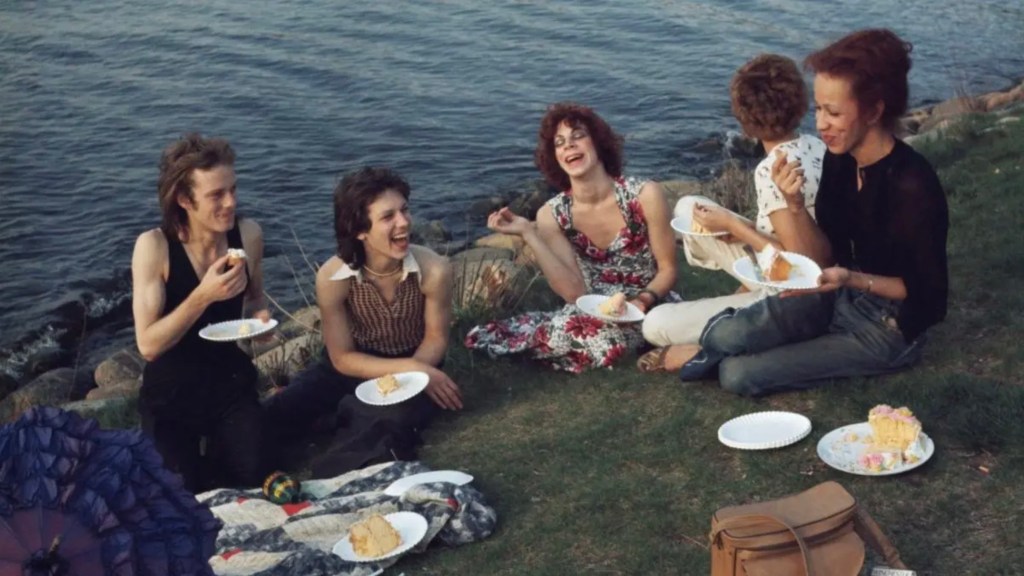
The film is split into 7 sections, with each sections mainly comprised into two very identifiable parts, slideshows, and traditional documentary footage. While relaying her past, slideshows of various lengths are shown on screen, showing photographs taken by Goldin throughout her life. While her personal history is told chronologically, these slideshows are disrupted in each section of the film, cutting to documentary footage of Goldin and the team behind PAIN, in their work since 2018 to hold the Sackler family accountable for the opioid crisis. These widely contrasting modes of presentation of Goldin’s past and present first take some time to get used to. The deeply personal photographs, accompanied by the sole voice of Goldin, as she retells her personal history, are difficult to leave behind in each shift to more traditional documentary filming of the present day. And each time these documentary segments end, they leave the viewer wanting more of the present as they are brought back into the past of Goldin and those around her. But with this contrast in styles to tell two different parts of Goldin’s life, there comes a deep understanding for the importance of both art and activism, and how different yet powerful they both are.
Goldin’s art, preceding her work with PAIN, was crucial in making visible those parts of life often kept invisible to most people. Whether it was images of people having sex, images of people in drag performing and celebrating with their friends, or images of her friends who became victims of the government’s ignorance towards the HIV/AIDS epidemic. These images were groundbreaking in their pushing the boundaries of what was acceptable in art. Working to make these often invisible lives visible to those not yet familiar, her work with PAIN and holding the Sackler family responsible for their actions is no exception. The Sackler family knew the dangers of the drug they were producing. Yet they still produced it, and still encouraged doctors and physicians around the world to prescribe their drug. Those who knew took a stand, but were continually brought down by the billionaires at the root of the problem. Goldin put her name on the line, refusing to show retrospectives of her art in museums and provide support for galleries unless they stopped accepting funds from the Sackler family. Goldin used her name and reputation for good, forcing these institutions to decide between the Sackler’s and Goldin herself. Through her art, and the photographs that got her this reputation, Goldin’s work was vital in the movement of beginning to hold the Sackler’s accountable for what they did.
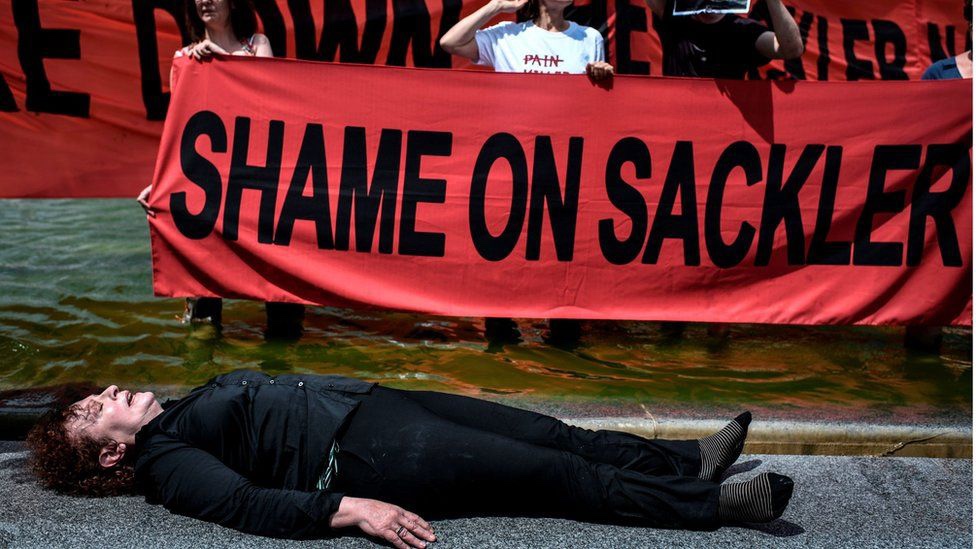
All the Beauty and the Bloodshed has been critiqued by some, saying it tackles too many issues. Trying to cover the life and coming-of-age of artist Nan Golding, as well as telling the powerful story of her experience with opioids and her work against the Sackler family, some argue it was too much. Instead, these vastly contrasting segments seem to work beautifully together, once it is realized that apart from the form, these sections do not vary much at all. Nan Goldin’s work was always about making the invisible visible. Through the slideshows and voiceover, the viewer is confronted with these images, in their entirety, on their screen as Goldin recounts her personal history and experiences. Much like the documentary footage, these images show the real lives of her subjects, in their own worlds, pushing the boundaries on what is called art. Goldin’s work with her organization PAIN is so impactful because of her art. The work she has done, through her art shedding light on hidden stories, gaining a reputation in the art and photography world as one of the great photographers. In her work against the Sackler family, she put this reputation on the line, and her courage and presence in the movement worked.
Art and activism are so important. When separate, they individually hold the power to change lives and make the world a brighter place. And when they are put together, the power they hold only grows. The contrasting forms of the documentary film, told in seven parts spanning past and present, work to present the viewer with these invisible lives, the lives often hidden from the public and not talked about. As Goldin says near the end of the film, “the wrong things are kept secret in society, and that destroys people”. The dangers of opioids kept secret. HIV and AIDS being largely ignored by the government. The impacted lives, and losses of said lives, ignored and pushed to the side by those in power. This secrecy destroys people. This unique style of the Oscar nominated documentary forces the viewer to confront the past, their participation in the present, and how they can and should shape the future. One can only hope that Goldin’s courage and empathy can continue to inspire both artists and activists around the world, to put pressure on the powers that be to take accountability and stop hiding the lives of those often kept invisible.
All the Beauty and the Bloodshed (2022) is currently streaming on Crave in Canada, and on HBOMax in the United States.
 After Screening Cinema