
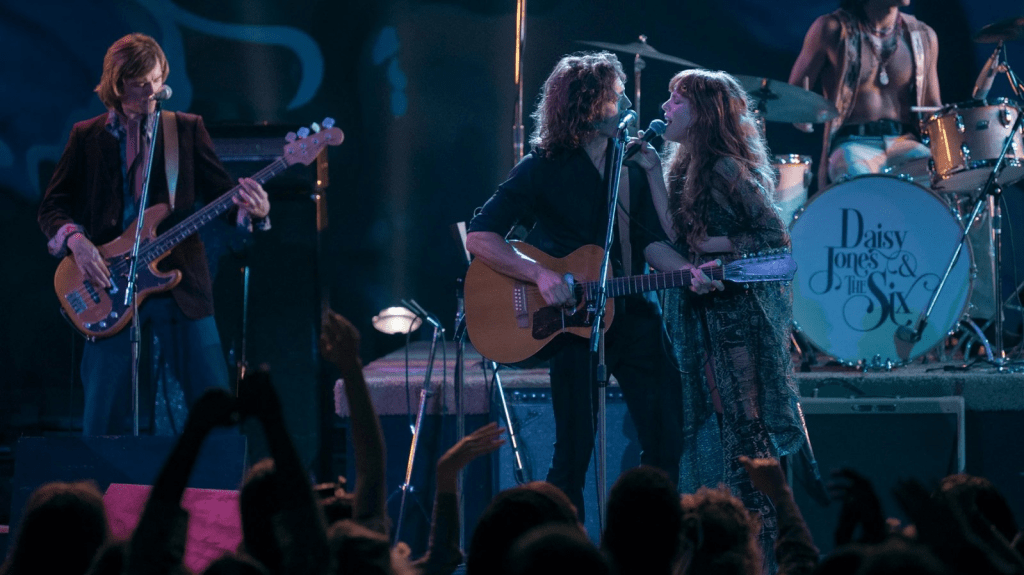
Daisy Jones & The Six is the recently released limited series that has captured BookTok, television, and music lovers alike, based on the 2019 novel by Taylor Jenkins Reid, author of The Seven Husband of Evelyn Hugo and Malibu Rising. Premiering over the month of March, audiences were captivated by the story of the fictional band, and the drama and lives of those within it. Following the lives of Daisy Jones, and Billy and Camila Dunne, as well as the other members of the band during their rise and fall from fame, the Amazon Prime limited series is based on the novel of the same title by Taylor Jenkins Reid (TJR). The novel is written in a unique format, comprised solely of the interviews from the members of the band, as well as their family and friends, reflecting on their time with the band during the 70’s, and their lives behind the scenes of the rise to fame of the group (read an excerpt here). Facing many of the common challenges of adapting such a wildly popular novel like fidelity and managing reader expectations, Daisy Jones & The Six had one additional challenge: adapting unreliable narrators to a television series. While the show succeeds in its format of switching between interviews, mirroring the format of the novel, the meat of the show comes from flashbacks to the band, where most of the episodes take place. Although it mostly succeeds in adapting TJR’s uniquely formatted novel, difficulties still do present themselves in the move from written work to a visual medium.
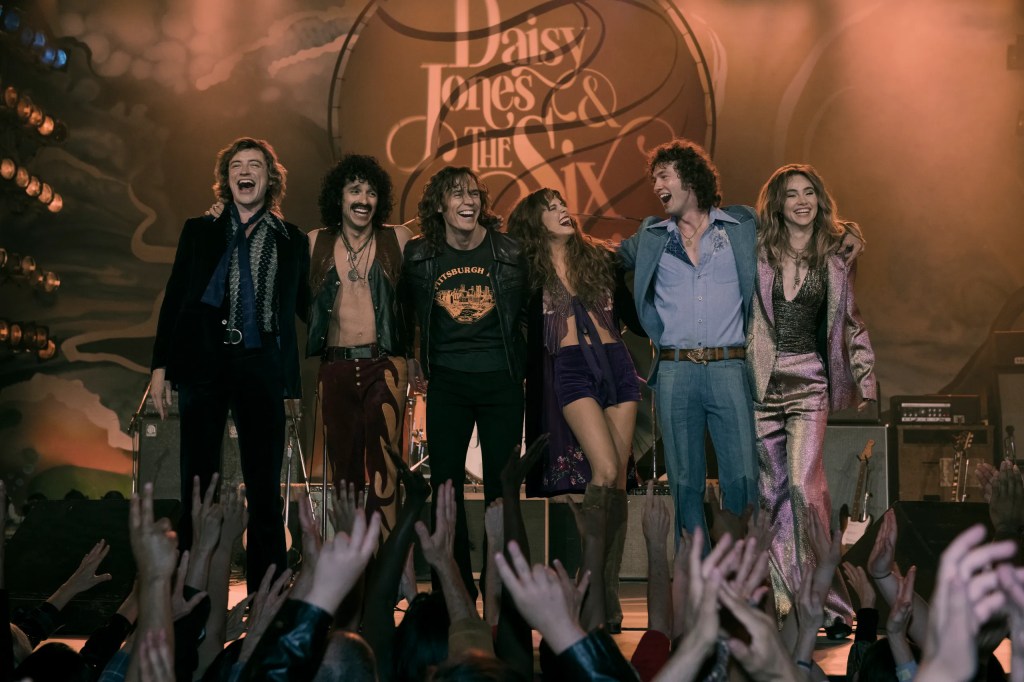
Daisy Jones & The Six follows the band, The Six, as they form, and later join with up-and-comer Daisy Jones to become the biggest (fictional) band of the 1970s. In a relationship with Camila, Billy Dunne struggles to maintain the star image of a rockstar frontman and also lead a life back home with his wife and family. To make matters worse, he and Daisy form a strong connection, out of their mutual love and passion for music and their rocky pasts. Along with other story lines following drummer Warren and bassist Eddie, as well as a complicated relationship between Billy’s brother Graham and pianist Karen, much like the book the show is packed with drama and tension from start to finish. Beginning the first episode telling the viewers that their performance in Chicago was the last time the band ever played together, the 10-episode series slowly leads the viewers on a tense ride through the ups and downs of the band and those around them, leading up to this penultimate ending on the Chicago stage.
One of the standouts of TJR’s novel is the voices she gives to her characters. With multiple narrators, as many of the characters share their words in interviews, the reader is always confronted with contrasting recollections of what happened in the past. TJR builds her narrators to be intentionally unreliable, adding depth to these seemingly surface level superstars. 70 years later, after the dissolution of the band just years after they got together, what motivation do they have to lie in these interviews? Are they lies, or simply different people remembering different things? TJR asks these questions to the reader, leaving it up for them to decide.
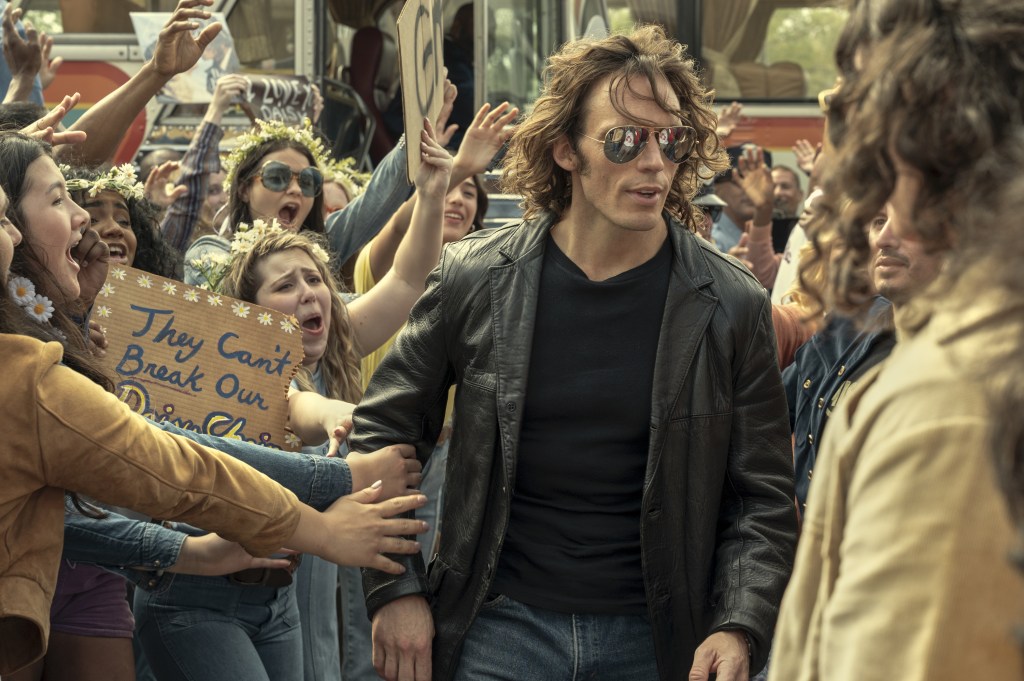
This unreliability would prove to be difficult to adapt. How would simple interviews with the members of a band, reminiscing over events that happened 70+ years ago translate to a visual medium, where viewers would surely want to see more than these subjects sitting in a room being interviewed? The series takes these interviews, and while they are incorporated into the show, the episodes mainly live in scripted flashbacks of the actual events. This makes for a complicated adaptation of unreliable narrators, when viewers are no longer just reading differing accounts of what happened, but instead are presented with just one truth on the screen, taking away the complexity of the misremembering of those being interviewed. One key scene that shocked viewers who were fans of the novel came in episode 6, featuring a kiss between Daisy and Billy after a fight in the studio. In the novel, this kiss never happens, or at least, Billy and Daisy never admit to it. Both seem to remember the event differently, accounting that Daisy leaned in but Billy turned away, but neither truth is ever confirmed. The truth is instead left in the reader’s hands, to determine the motivations behind the stories both Billy and Daisy are telling the interviewer. This small yet important change seems to take away some of the complexity of these characters in the future but also seems essential in its transformation from a written work to a visual television series.
This idea of the unreliable narrator is made even more complicated when it is revealed at the end of the novel that the one doing the interviewing is Julia Dunne, the daughter of Billy and Camila. With this knowledge, everything the reader has previously read must be challenged. What would Billy want to withhold from Julia, his eldest daughter, about his relationship with Daisy, while he was married to Julia’s mother? What would Daisy want to keep to herself, knowing the young woman she is being interviewed by is the daughter of Billy and Camila? With the novel’s emphasis on the structure and its interview style, this reveal at the end of the novel is jarring. The reader is forced to look back at and question everything they have read, every personal account and memory of the past, searching for the truth in a web full of unreliable rock stars. The reader cannot avoid thinking of the impact this reveal has on the interviews, as they have just spend over 300 pages reading just these interviews. In the television series, while this reveal still comes as a shock, the effect is much less, as much more of the show’s emphasis is on its portrayal of the band’s past rather than the interviews themselves.
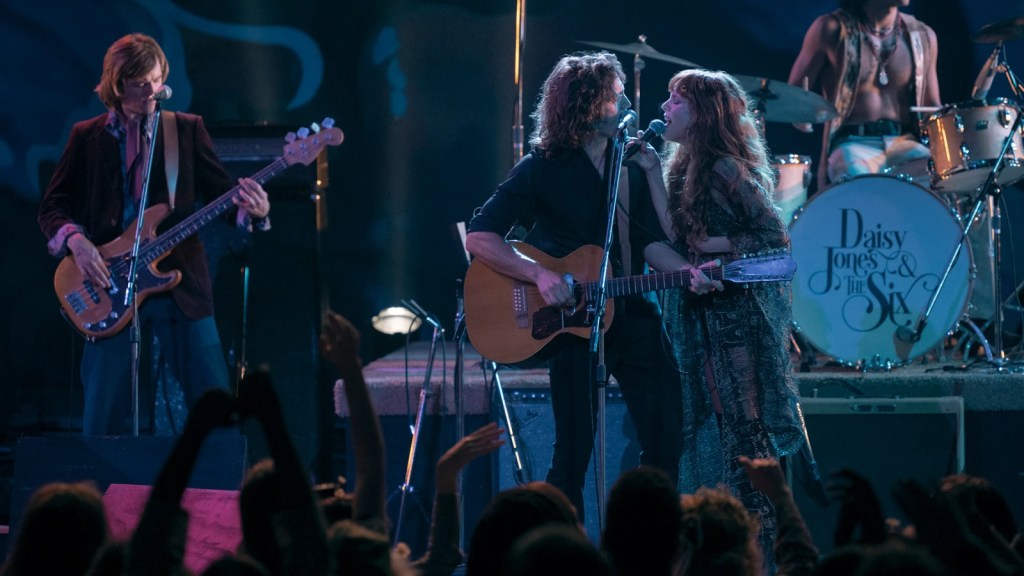
Daisy Jones & The Six is a star-studded exploration into the lives of those in the band, Daisy Jones & The Six, and the people surrounding them. It talks to real issues, like drug addiction, alcoholism, and a woman’s passion outside of the home, while providing an eye-opening and thrilling ride into the past. The performances are stellar, and the adaptation of the songs from written works to actual music available to listen to and stream is astounding. The limited series has quickly become one of the better book-to-screen adaptations of the past few years, remaining true to the heart at the core of the novel. In its translation from a written work, comprised solely of interviews, to a visual television show, it loses some of its power that the novel had in its use of narrators as unreliable and self-servicing. The television series still manages to capture notes of an unreliable narrator, and in its translation into a visual medium, exceedingly captures both the beauty and the heartbreak readers so loved about the novel. Despite its few losses, the series still manages to portray the powerful study the novel so graciously provided on this beloved rock band of the 1970s. One can only hope that the future of Taylor Jenkins Reid screen adaptations are able to follow suit.
All 10 episodes of Daisy Jones & The Six are available to stream on Amazon Prime Video in Canada.
 After Screening Cinema